Octavius Swap
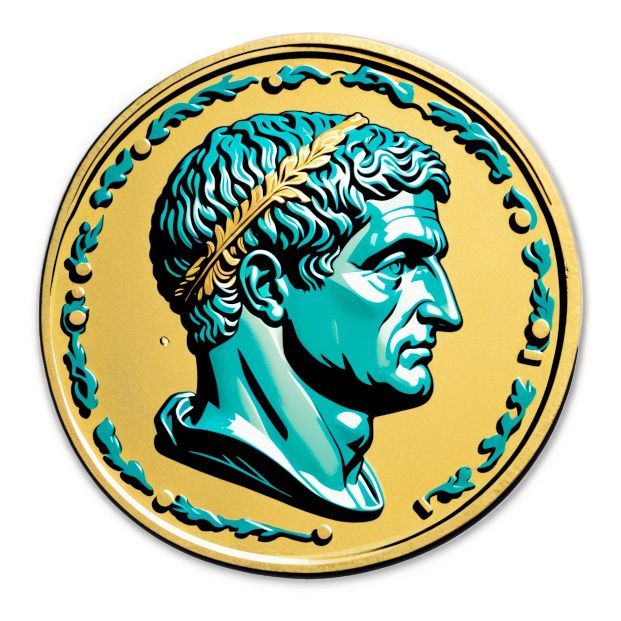
A decentralized exchange on OctaSpace,
inspired by the monetary order of Augustus
1. Abstract
Octavius Swap is a decentralized exchange (DEX) deployed on the OctaSpace blockchain. It implements the Uniswap V2 automated market maker (AMM) model, enabling permissionless swapping and liquidity provision between native OCTA (via wrapped WOCTA) and ERC-20 assets such as OVS (Octavius).
The name and design ethos draw on a historical parallel: Gaius Octavius—later known as Augustus—reorganized Roman coinage into a durable, multi-denominational system that underpinned commerce across an empire. Octavius Swap likewise aims to provide a clear, rules-based market layer for digital assets on OctaSpace: transparent reserves, fixed fee logic, and public tools for observing price and liquidity in real time.
2. From Octavius to Augustus: Currency and Power
Gaius Octavius (63 BC – AD 14), adopted heir of Julius Caesar, emerged from the civil wars of the late Republic as sole ruler of the Roman world. In 27 BC the Senate granted him the honorific Augustus; historians treat this moment as the transition from Republic to Principate.
Coinage was never merely economic. Under the Republic, moneyers and generals used issues for propaganda and payment of troops. Caesar’s portrait on coins broke earlier norms against living rulers appearing on the currency. Augustus systematized that power: his image, titles, and achievements circulated on metal that every subject handled.
“Stability of weight and purity, and a published hierarchy of denominations, turned coinage from wartime expedient into infrastructure.”
Before Augustus, Republican and triumviral issues had been uneven in rhythm and standard. Gold was struck in large quantities during the civil wars; silver denarii varied with political need. Everyday bronze had a long, complicated history of weight reductions. The problem was not the absence of money, but the absence of a single, lasting schedule of values that markets could trust for generations.
3. The Augustan Coinage Reform
Around 23 BC, Augustus carried through a reform that historians call the coinage reform of Augustus. Its lasting effects included:
- Imperial control of gold and silver. Minting of the aureus and denarius was brought under the emperor’s authority, with major production later centered at places such as Lugdunum (Lyon).
- Senatorial bronze (in form). Base-metal issues often carried the mark SC (senatus consulto), preserving a republican appearance while effective control remained imperial.
- Stable bimetallic core. Fixed relationships between gold and silver denominations, without immediately altering the traditional weight of the aureus and denarius in the reform’s main account.
- Rebuilt small change. Below the denarius, Augustus established a coherent ladder of brass (orichalcum) and copper coins for daily payments.
The classic exchange ladder of the early empire is often summarized as:
1 aureus = 25 denarii = 100 sestertii = 400 asses
That hierarchy did not eliminate local or provincial coinage everywhere, but it gave the Roman monetary economy a backbone that remained recognizable for roughly two centuries, until progressive debasement under later emperors eroded trust in the silver unit.
4. Currencies of the Augustan System
Augustus did not invent every Roman denomination from nothing; several names and roles predated him. His achievement was to regularize a full stack of coins—precious and base—into one working system. The principal units associated with that order are:
4.1 Precious metal
| Coin | Metal | Role | Typical relation |
|---|---|---|---|
| Aureus | Gold | High-value unit; imperial prestige and large payments | 1 aureus ≈ 25 denarii |
| Gold quinarius | Gold | Half-aureus (less common in circulation narratives) | ½ aureus |
| Denarius | Silver | Workhorse silver coin of the empire | 1 denarius = 4 sestertii = 16 asses |
| Silver quinarius | Silver | Half-denarius | ½ denarius |
Under the reform accounts commonly cited, the aureus was struck at about 42 to the Roman pound of gold, and the denarius at about 84 to the pound of silver, at high purity in the early Augustan period.
4.2 Base metal (everyday exchange)
| Coin | Metal (typical) | Role | Relation (simplified) |
|---|---|---|---|
| Sestertius | Orichalcum (brass) | Large token; accounting unit in literature | ¼ denarius · 4 asses |
| Dupondius | Orichalcum | Medium brass coin | ½ sestertius · 2 asses |
| As | Copper | Common small change | 1/16 denarius |
| Semis | Copper / brass variants | Half-as | ½ as |
| Quadrans | Copper | Quarter-as; smallest ordinary unit | ¼ as |
Together, these coins formed a ladder of convertibility: gold and silver for stores of value and large settlement; brass and copper for the marketplace. The analogy for a modern DEX is not literal metal, but structured convertibility—assets that can be exchanged under known rules, with transparent “weights” (reserves) instead of imperial mint edicts.
5. From Imperial Coin to On-Chain Markets
Roman coinage solved coordination: shared units, public standards, and wide circulation. Blockchains solve a related problem with different tools—shared ledgers, open-source market contracts, and verifiable reserves.
Octavius Swap sits on OctaSpace, an EVM-compatible network where smart contracts execute swaps without a central order-book operator. The flagship pair connects:
- OCTA — native gas and value token of OctaSpace, used in the AMM as WOCTA (wrapped OCTA);
- OVS (Octavius) — an ERC-20 asset traded against WOCTA/OCTA.
Where Augustus published a table of denominations, Octavius Swap publishes on-chain reserves and prices. Anyone can audit the pool, reconstruct the spot rate, and verify fees from contract code and events.
6. Octavius Swap: Protocol Overview
Octavius Swap is an instance of the Uniswap V2 protocol:
- Automated Market Maker (AMM) — prices emerge from the constant-product invariant \(x \cdot y = k\) (with fee adjustments on swaps).
- Liquidity providers (LPs) deposit token pairs and receive LP tokens representing a share of the pool.
- Permissionless listing — new pairs can be created via the factory (subject to network economics and token standards).
- Non-custodial trading — users retain keys; the router and pair contracts only move assets according to code.
Core deployed components on OctaSpace include a Factory, Router (with init-code hash aligned to the local pair bytecode), WOCTA as the wrapped native asset, and the live WOCTA/OVS pair.
7. Product Features
7.1 Token swaps
- Swap OCTA ↔ OVS (native OCTA is wrapped/unwrapped via WOCTA under the hood).
- Swap WOCTA ↔ OVS directly against pool reserves.
- Quotes from reserves / router
getAmountsOut, with slippage controls in the interface.
7.2 Liquidity provision
- Add liquidity in the current pool ratio; receive LP tokens.
- Remove liquidity to redeem underlying WOCTA and OVS.
- LPs earn the majority of the 0.30% swap fee as an increase in pool reserves.
7.3 Web application
- Wallet connection on OctaSpace (chain ID 800001).
- Swap and liquidity views with token selectors for OCTA, WOCTA, and OVS.
- Configuration bound to deployed Factory, Router, and WOCTA addresses.
7.4 Transparency tools
- Pool Tracker — dedicated live dashboard (see §8).
- Landing page — overview of swappable assets and routes.
- Links to the OctaSpace block explorer for pair, router, and transaction verification.
7.5 Protocol fee controls
- Uniswap V2–style
feeTo/feeToSetteron the Factory. - When
feeTois set, a portion of trading fees can accrue as protocol-owned liquidity.
8. Pool Tracker
The Octavius Swap Pool Tracker is a read-only HTML dashboard that observes the WOCTA/OVS pair directly on OctaSpace. It is designed for transparency: no custody, no trade execution—only measurement and display.
8.1 Live pool metrics
- Reserves — OVS and WOCTA balances in the pair contract.
- TVL (USD) — approximate dollar value of the pool using OCTA/USD reference pricing.
- LP supply — total liquidity tokens outstanding.
- Spot prices —
- 1 OVS → OCTA (from reserves)
- 1 OVS → USD (reserves × OCTA/USD)
- 1 OCTA → USD (market reference)
- 1 WOCTA → OVS
8.2 Trade feed
- Recent
Swapevents from the pair (amounts, implied execution price, transaction links). - Classification of flow as buy or sell of OVS relative to the pool.
8.3 Price chart
- Line chart of execution prices derived from swap history.
- Toggle between OVS/OCTA and OVS/USD units.
- Live updates as new swaps are included in blocks.
8.4 Auto-refresh
- Periodic polling of on-chain reserves and events.
- Subscription to pair events (
Swap,Sync,Mint,Burn) where the RPC allows. - OCTA/USD reference pulled from public market data APIs when available, with manual override.
Together, these features mirror the public nature of imperial coin tables: anyone can see the “weights” of the market without asking a gatekeeper.
9. Fees and Protocol Parameters
| Parameter | Value |
|---|---|
| Swap fee | 0.30% (Uniswap V2 standard) |
| LP share of fee | 5/6 of the swap fee (retained in reserves) |
| Protocol share | 1/6 when feeTo is enabled (via liquidity mint mechanics) |
| Network | OctaSpace mainnet, chain ID 800001 |
Factory fee roles (illustrative of governance surface; always verify on-chain):
feeTo— recipient of protocol fee liquidity when activefeeToSetter— address authorized to updatefeeToor transfer the setter role
10. Technical Architecture
| Component | Role |
|---|---|
| Factory | Creates pairs; stores fee configuration; enumerates pairs |
| Pair (WOCTA/OVS) | Holds reserves; executes swaps; mints/burns LP tokens |
| Router | User entrypoint for swaps and liquidity with deadline and slippage parameters |
| WOCTA | WETH9-style wrapper for native OCTA |
| Frontend | Wallet UI for swap and liquidity |
| Pool Tracker / Landing | Public analytics and education surfaces |
Router deployments on custom EVM chains must use the correct pair INIT_CODE_HASH
so that on-chain library address computation matches Factory-created pairs.
11. Outlook
Octavius Swap begins with a focused market—OCTA/WOCTA and OVS—and public measurement tools. Natural extensions include additional pairs, deeper liquidity incentives, improved analytics, and tighter integration with OctaSpace wallets and explorers—always preserving the principle that market state is verifiable on-chain.
Augustus’s monetary legacy was not a single coin, but a system others could rely on. Octavius Swap aspires to the same in software form: simple rules, visible reserves, and open access.
12. Disclaimer
This document is for informational and educational purposes. It is not financial, legal, or tax advice. Cryptocurrency trading and liquidity provision involve substantial risk, including total loss of funds. Historical comparisons to Roman coinage are illustrative metaphors, not claims of legal continuity or investment performance. Always verify contract addresses and code on the OctaSpace explorer before interacting. Protocol parameters and interfaces may change.